Honeybee: The Quirky Font That Turns Ordinary Designs Into Memorable Experiences
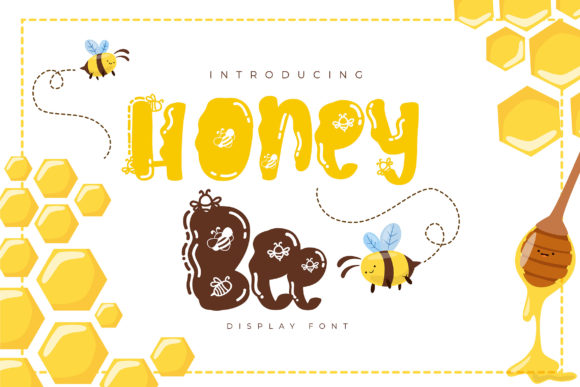
There is a specific kind of magic that happens when you swap a standard sans-serif for something with a little more personality. It's not just about making text look different; it's about changing the entire emotional temperature of a project. Honeybee fits perfectly into this category. This isn't your average workhorse typeface designed to disappear into the background. Instead, Honeybee is a cool and quirky decorative font that demands attention while maintaining a playful charm. Whether you are designing a wedding invitation or rebranding a local coffee shop, adding this font to your most creative ideas can instantly notice how it makes them stand out.
Why Honeybee Stands Out in a Sea of Standard Type
In a digital landscape saturated with clean lines and minimalist aesthetics, breaking the mold requires a tool that feels organic yet structured. Honeybee brings a distinct character to the table. Its design language suggests movement and whimsy without sacrificing readability. The curves feel hand-drawn, giving projects an artisanal touch that mass-produced templates often lack. When you use Honeybee, you aren't just selecting a font; you are choosing a voice that speaks directly to creativity and fun.
The true power of this typeface lies in its accessibility. Unlike many decorative fonts that require complex software plugins or specialized rendering engines, Honeybee is PUA encoded. This technical detail translates to a massive practical advantage for designers and content creators. PUA (Private Use Area) encoding means you can access all glyphs and swashes with ease, ensuring that every unique flourish and stylistic alternate is available right within your standard text editor or design software. You don't need to hunt down obscure libraries or worry about missing characters; the full range of the font's personality is at your fingertips.
Real-World Applications for Creative Professionals
While it is tempting to view decorative fonts as mere novelty items, their utility extends far beyond simple decoration. The versatility of Honeybee allows it to serve as a functional bridge between brand identity and user engagement across various industries. Let's explore how different professionals are leveraging this quirky aesthetic to solve real problems.
- Event Planning and Stationery: Weddings, birthdays, and corporate galas rely heavily on the first impression created by invitations. A standard Helvetica invite might be clear, but it rarely evokes emotion. Honeybee transforms these documents into keepsakes. The swashes add a sense of celebration and elegance that feels personal. Imagine the tactile joy of holding a wedding program where the names are written in a font that looks like it was sketched by a friend. It sets the tone for the entire event immediately.
- Food and Beverage Branding: The food industry thrives on appetite appeal and warmth. Bakeries, craft breweries, and farm-to-table restaurants benefit immensely from fonts that feel handmade. Honeybee works exceptionally well for menu headers, logo lockups, and packaging labels. The "bug" in the name isn't lost; rather, the font's natural flow mimics the organic shapes found in nature and ingredients. It tells the customer that the product inside is crafted with care, not churned out by a machine.
- Children's Products and Education: For brands targeting families, trust and approachability are paramount. Educational materials, toy packaging, and children's book covers need to look inviting. Honeybee's rounded edges and friendly proportions reduce visual tension, making the content feel safe and accessible. Teachers and curriculum developers can use it to highlight key concepts in worksheets, turning dry learning material into something students actually want to read.
- Social Media and Content Creation: In the fast-scrolling world of Instagram and TikTok, static images need to stop the thumb. Influencers and small business owners often struggle to create consistent branding without a graphic designer on staff. Using Honeybee allows them to overlay text on photos with a unique flair that aligns with their personal brand. Because the glyphs are easily accessible, creating quote graphics or promotional banners becomes a quick, intuitive process.
How Different Users Benefit from the Same Tool
One of the most fascinating aspects of Honeybee is how its utility shifts depending on who is using it. A professional graphic designer sees one set of possibilities, while a small business owner sees another, yet both arrive at a similar result: a standout design.
For the graphic designer, the PUA encoding is the primary draw. It offers granular control over the typographic hierarchy. By utilizing the swashes, a designer can create custom ligatures that connect letters in unexpected ways, generating a seamless flow that looks bespoke. This level of customization allows for high-end editorial layouts where typography acts as an illustration itself. The ability to toggle between standard characters and elaborate flourishes means the designer can modulate the intensity of the design without switching typefaces.
Conversely, for the solo entrepreneur or hobbyist, the benefit is simplicity and impact. They may not know the difference between kerning pairs or OpenType features, but they do know what looks good. Honeybee removes the barrier to entry. Because the font handles the heavy lifting of style, the user can focus on the message. They can take a plain product photo, slap a headline in Honeybee, and have a professional-looking advertisement in seconds. It democratizes design, allowing those without formal training to produce work that feels polished and intentional.
Navigating Considerations and Limitations
Even the most versatile tools require context. While Honeybee is a fantastic addition to any creative toolkit, it is not a universal solution. Understanding its strengths helps you avoid common pitfalls where decorative fonts can undermine a project's effectiveness.
The primary consideration is readability at scale. Decorative fonts thrive in headlines, logos, and short phrases. However, they often struggle when used for body copy. The intricate details of the swashes and the unique shapes of the letters can become visually fatiguing if the reader has to process hundreds of words in Honeybee. The best practice is to pair it with a neutral, highly legible sans-serif or serif font. This contrast creates a balanced composition where Honeybee provides the "wow" factor, and the supporting text ensures the information is digestible.
Another factor is audience perception. The quirky nature of Honeybee signals informality and creativity. If you are designing a financial report, a legal contract, or a medical brochure, this font might send the wrong signal. It could make a serious institution appear unprofessional or flippant. Always ask yourself: does the personality of the font match the gravity of the message? If the goal is to convey authority and stability, a more traditional typeface is likely the better choice. But if the goal is to spark joy, curiosity, or excitement, Honeybee is an ideal candidate.
Finally, consider the technical environment. While PUA encoding solves many compatibility issues, it is always wise to test your designs across different devices and browsers. Ensure that the specific glyphs you are using render correctly on mobile screens, where space is limited. Sometimes, a swash that looks beautiful on a desktop monitor might cause layout shifts on a smaller phone screen. Testing early prevents costly redesigns later.
Making Your Ideas Unforgettable
Ultimately, the goal of any design project is to leave a lasting impression. In a world where consumers are bombarded with thousands of ads daily, standing out is no longer optional; it is essential. Honeybee provides a strategic advantage by injecting a human element into digital and print media. It reminds us that behind every brand is a person with a story to tell.
When you add this font to your most creative ideas, you are essentially signing your work. You are saying that you paid attention to the details. You are acknowledging that the way words look is just as important as what they say. Whether you are crafting a boutique logo, designing a party invitation, or updating a website header, the quirks of Honeybee can transform a mundane task into a memorable experience. By understanding its capabilities and respecting its limitations, you can harness the full potential of this unique typeface to elevate your work and connect with your audience on a deeper level.