Understanding the Paint Brush Stroke Germany Flag for Authentic Design Applications
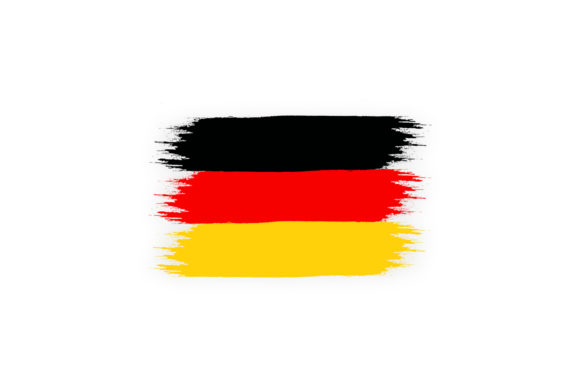
In the realm of graphic design and digital art, few visual elements carry as much weight or require as much nuance as national symbols. The Paint Brush Stroke Germany Flag represents a specific intersection of artistic expression and patriotic identity. Unlike standard vector flags that prioritize geometric precision, this style emphasizes texture, movement, and the human hand behind the creation. For professionals aged 20 to 50 who are evaluating design assets, understanding the distinct characteristics of this format is crucial for making informed decisions about its application in branding, editorial work, or creative projects.
The core distinction of a paint brush stroke version of the German flag lies in its departure from rigid uniformity. A traditional representation of the black, red, and gold tricolor relies on perfect horizontal bands. In contrast, the paint brush stroke interpretation introduces organic irregularities. These designs mimic the physical act of applying pigment to a surface, resulting in uneven edges, varying opacity, and subtle color bleeding where the strokes meet. This aesthetic choice signals authenticity and effort, often conveying a message of passion or historical depth rather than sterile officialdom.
Evaluating Distinct Characteristics and Visual Impact
When analyzing the Paint Brush Stroke Germany Flag, one must look beyond the colors themselves. The visual impact is derived from the texture and the implied motion. Standard digital flags are static; they do not suggest time passing or energy being exerted. However, a brush stroke version implies a narrative. It suggests that the symbol was created by an artist, perhaps in a moment of celebration or reflection. This makes it particularly effective for contexts where emotion is the primary driver of communication.
The "editable format" aspect mentioned in many design resources adds another layer of utility. High-quality versions of this asset typically come with layers separated by color band or even individual stroke segments. This allows designers to manipulate the opacity, blend modes, and position of each element independently. Such flexibility is essential when integrating the flag into complex compositions. For instance, a designer might want to make the red band appear slightly faded to simulate weathering, or increase the roughness of the black band to match a gritty background texture. Without this level of editability, the asset remains a flat image, limiting its potential use cases significantly.
Comparative Analysis: Digital Precision vs. Artistic Imperfection
To determine if the Paint Brush Stroke Germany Flag fits your project, it is necessary to compare it against other common formats. The most direct alternative is the standard vector flag (SVG or EPS) produced by official government repositories or stock sites. While these are technically superior for applications requiring exact color matching and scalability without loss of quality, they lack the soulful imperfections of the brush stroke variant.
- Standard Vector Flags: Best suited for formal documentation, legal headers, and corporate websites where brand consistency and strict adherence to heraldic rules are paramount. They offer clean lines and perfect alignment but can feel cold or impersonal in creative contexts.
- Paint Brush Stroke Versions: Ideal for posters, social media campaigns, merchandise design, and artistic illustrations. They excel in environments where the goal is to evoke feeling rather than convey strict information.
- Rasterized or Pixelated Versions: Often found as PNGs with transparent backgrounds. While easier to drop into basic photo editors, these lack the resolution independence of vectors and the layer control of editable brush stroke files.
The tradeoff here is between precision and personality. If you are designing a brochure for a government agency regarding tax laws, the Paint Brush Stroke Germany Flag would likely be inappropriate due to its informal nature. Conversely, using a rigid, perfect vector flag for a poster celebrating a local Oktoberfest event might feel too corporate and fail to capture the festive, communal spirit of the occasion.
Technical Considerations and File Formats
Choosing the right file type is just as important as selecting the right visual style. When searching for an editable Paint Brush Stroke Germany Flag, users will encounter various formats such as Adobe Illustrator (.AI), Photoshop (.PSD), or scalable vector graphics (.SVG). Each serves a different workflow need.
Vector-based brush strokes (.AI or .EPS) allow for infinite scaling. You can resize the flag from a business card to a billboard without pixelation. This is vital for print-on-demand services or large-scale outdoor advertising. However, some advanced texture effects are difficult to replicate perfectly in pure vector software. Raster-based editable files (.PSD) often contain high-resolution textures that mimic canvas grain or watercolor paper. These are excellent for digital displays or high-end print jobs where the texture needs to be visible at close range. The decision often comes down to whether the project prioritizes scalability or textural fidelity.
Determining the Best Fit for Your Project
Selecting the Paint Brush Stroke Germany Flag requires a clear understanding of the target audience and the intended message. This style resonates well with audiences who appreciate craftsmanship, history, and cultural heritage. It is frequently used in contexts involving:
- Cultural Events: Festivals, concerts, and community gatherings benefit from the warm, inviting look of hand-painted imagery.
- Artistic Commentary: Op-eds, blog posts, or magazine features discussing German culture, politics, or history often use this style to frame the content as thoughtful and curated.
- Merchandise and Apparel: T-shirts, tote bags, and stickers designed with brush stroke aesthetics often sell better because they appear less mass-produced and more unique.
- Startups and Creative Agencies: Companies wanting to differentiate themselves from competitors often choose brush stroke elements to signal innovation and a break from tradition.
However, there are scenarios where this option is ill-suited. In financial reporting, legal contracts, or any context requiring absolute neutrality and formality, the subjective nature of a brush stroke can undermine credibility. The slight variations in line width and color saturation might be perceived as unprofessional or sloppy by stakeholders expecting rigorous standards. Additionally, if the design needs to be reproduced in a single-color environment, such as a fax machine or a low-cost black-and-white printer, the nuance of the brush stroke may be lost entirely, rendering the image ineffective.
Navigating Limitations and Ethical Considerations
While the Paint Brush Stroke Germany Flag offers significant aesthetic advantages, users must remain mindful of copyright and usage rights. Many high-quality editable assets are sold by independent artists. Before downloading or purchasing, it is essential to verify the license terms. Some licenses restrict commercial use, while others may prohibit modifying the design in ways that distort the flag's proportions too drastically.
Furthermore, there is an ethical dimension to representing national symbols. Even in an artistic context, altering the flag can sometimes be viewed as disrespectful depending on the surrounding content. For example, using a brush stroke version of the flag in conjunction with controversial political messaging could amplify the emotional weight of the statement, potentially leading to unintended backlash. Professionals should always consider how the artistic style interacts with the message being conveyed.
Another practical limitation involves color management. The vibrant black, red, and gold of the German flag can behave unpredictably when applied over textured backgrounds or mixed with other colors in RGB versus CMYK workflows. A brush stroke design might have gradients or soft edges that shift in color during the printing process. It is advisable to test the final output on the intended medium before committing to a full production run.
Making the Final Decision
The choice to utilize a Paint Brush Stroke Germany Flag ultimately depends on the balance between visual appeal and functional requirement. If the goal is to create a connection, evoke emotion, or stand out in a crowded digital space, this format is a powerful tool. Its editable nature provides the freedom to tailor the look to specific design constraints, ensuring that the final result feels bespoke rather than generic.
Conversely, if the priority is clarity, compliance, and broad accessibility, a standard vector flag remains the superior choice. There is no single "best" option; there is only the option that best serves the specific context of the project. By carefully weighing the strengths of the brush stroke style against the demands of the audience and the medium, designers can make a decision that enhances their work without compromising professional integrity. Whether for a personal art project or a major marketing campaign, understanding these nuances ensures that the German flag is represented with both respect and creativity.